by Team LEISA India | May 18, 2016 | Articles, Resource Management, Water Management
The Trans-Himalayan region of Nepal is often referred to as the country’s desert. Water is a scarce resource that has traditionally been managed through local norms and institutions. The remoteness of the region has limited the role and influence of the central... 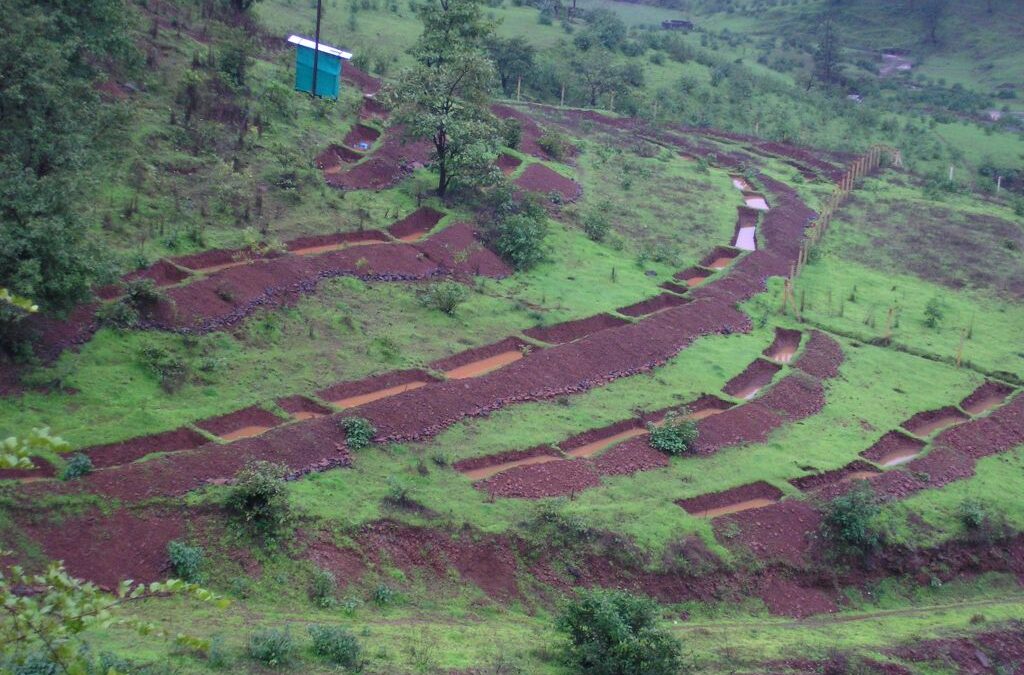
by Team LEISA India | May 18, 2016 | Articles, Resource Management, Water Management
Small scale watershed development is a viable way to improve degraded ecosystems, create diverse livelihood opportunities for rural people and build stable ecosystems. Aseema trust demonstrated this on a small area of 14 acres in the tribal villages of Maharshtra. The... 
by Team LEISA India | May 3, 2016 | Articles, Farm Economics, Trade
Community empowerment is a driving force to motivate rural people for conservation efforts. Access to knowledge and financial resources are basic requirements for the community to translate their acquired knowledge and skills into practices that lead to their well... by Team LEISA India | May 3, 2016 | Articles, Farm Economics, Farmer's Diary, Trade
Timely credit is the key Before 1970, in rural India, borrowing money was a shameful act. In 1971, I borrowed Rs. 5000 from a rich family from my neighbouring village as a goodwill loan without any interest. My father abused me even though I wanted to use that money... 
by Team LEISA India | May 3, 2016 | Articles
Arecanut (or Betel nut) plays an important and popular part in Asian culture, especially in India. Arecanut is a widely grown cash crop in the malnad belt (hill belt) of Karnataka. A significant portion of Shimoga and its immediate neighboring districts is an agrarian... 
by Team LEISA India | May 3, 2016 | Articles, Farm Economics, Trade
Big loans are a great risk for small groups. Investments should match the group’s ability to save and produce. Strengthening groups, forming federations and building up group fund is a better option of accessing timely credit, also leading to building up social...